The Motherhood I Needed the Second Time
How having a second baby helped me rewrite the story I had been telling myself about my first
When Charlotte was born, I believed I had failed her.
No one said those words to me. In fact, everyone told me the opposite.
They reminded me that I had not chosen preeclampsia. I had not caused the placental abruption. I could not have prevented the true knot in her umbilical cord or the growth restriction that meant she was much smaller than she should have been.
I understood all of that intellectually.
But emotionally, it was much harder to separate what had happened to my body from what my body had done to her.
At 32 weeks pregnant, my body made the ultimate decision: it could no longer safely carry my baby.
Charlotte was delivered weighing two pounds, fifteen ounces, and instead of leaving the hospital with her in my arms, I left without her.
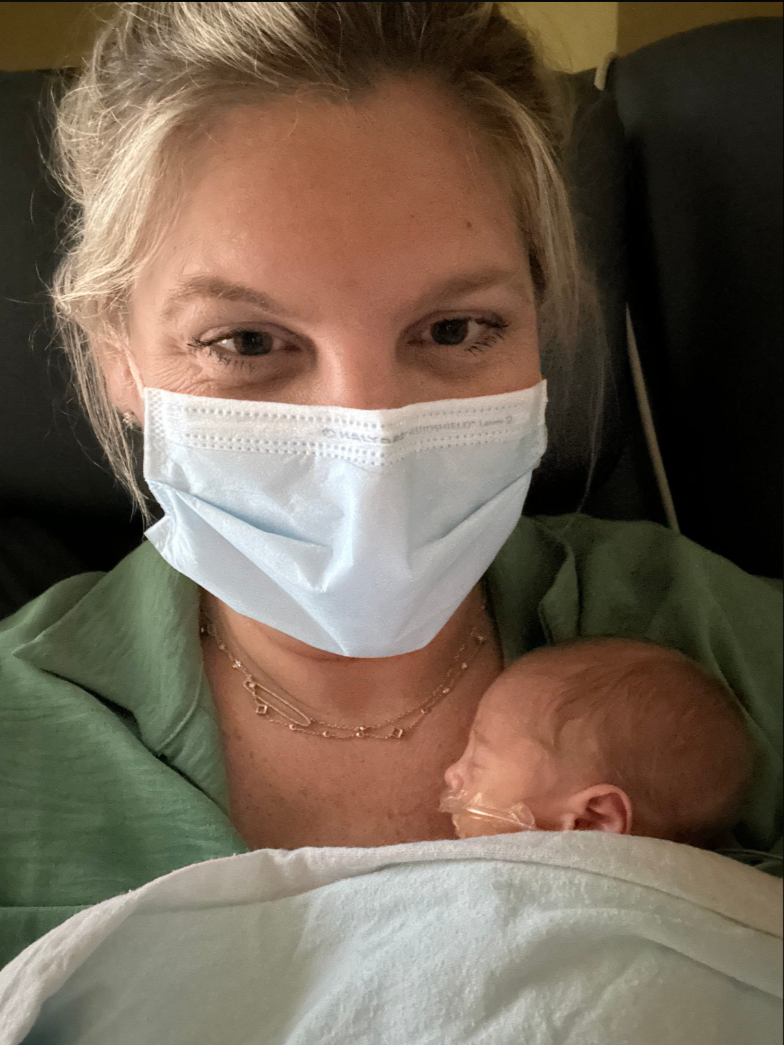
For forty days, she lived in the NICU.
For forty days, other people monitored her breathing, recorded every milliliter—and eventually every ounce—she ate, changed her diapers, and decided when I was allowed to hold her. I learned to mother her through the openings of an isolette. I learned to ask permission before touching my own baby.
I knew the doctors had saved both of our lives. I knew how fortunate we were.
But gratitude and grief can exist at the same time.
I was grateful she was alive.
I was also grieving the pregnancy, delivery, and beginning that we never got to have.
Once Charlotte came home, I thought perhaps I would finally feel like her mother. Instead, I carried the NICU home with me.
I watched her breathing. I worried about how much she ate. I measured her progress against growth charts, developmental leaps, milestones, and adjusted ages. Feeding never came easily, and nursing did not happen the way I had imagined it would.
Motherhood felt less instinctive than clinical—a series of appointments, therapies, and things we needed to work on.
Instead of settling into my maternity leave and simply enjoying my baby, I spent it worrying about helping her catch up, tracking every milestone, and keeping appointment after appointment.
Then, when she was six months old, I returned to work as a special education teacher.
I was pouring into other people’s children instead of my own.
While I was at work, Danny or our wonderful nanny took Charlotte to feeding therapy, physical therapy, and speech. Our nanny chose her clothes in the morning, made her lunch, rocked her to sleep for naps, and took her to the library and music class.
Charlotte was deeply loved. She was cared for by people who adored her, and I was fortunate to have that support.
But somewhere beneath that gratitude was another layer of guilt.
First, my body had not been able to keep her safe inside me. Then I could not nurse her the way I had hoped. And now someone else was spending her days doing the ordinary parts of motherhood I had once imagined would belong to me.
I felt as though I had failed her before she was born and then continued handing pieces of her childhood to other people.
I do not know if I fully understood how much of that I was carrying until Henry was born.
Throughout my pregnancy with him, I prayed things would be different. I prayed he would stay inside longer. I prayed I would get to hold him immediately. I prayed we would leave the hospital together.
Some people thought we were a little crazy to have another baby after everything we had experienced with Charlotte. Then, before conceiving Henry, we experienced a loss. For a while, we wondered if it was fate telling us that we should simply be grateful for the one happy, healthy child we already had.
So when I became pregnant with Henry, the excitement was accompanied by fear and trepidation.
At 22 weeks pregnant, we moved to a new state, where I had to find a new OB-GYN for myself and a pediatrician for our soon-to-be two children. There was so much happening that I did not have much time to sit with my fear, but it was always there.
Then 32 weeks came—the point when my pregnancy with Charlotte had abruptly ended.
And it went.
At my appointment, my doctor confirmed that everything looked wonderful and Henry was healthy. For the first time, I allowed myself to exhale.
Soon, I was going to weekly appointments, reaching a stage of pregnancy I had never experienced with Charlotte. With every passing week, the goalpost moved a little farther. Slowly, the possibility of carrying him to term—and having the birth I had imagined—began to feel real.
I wanted those things, of course, because I wanted him to be safe.
But I did not realize how badly I needed them for myself too.
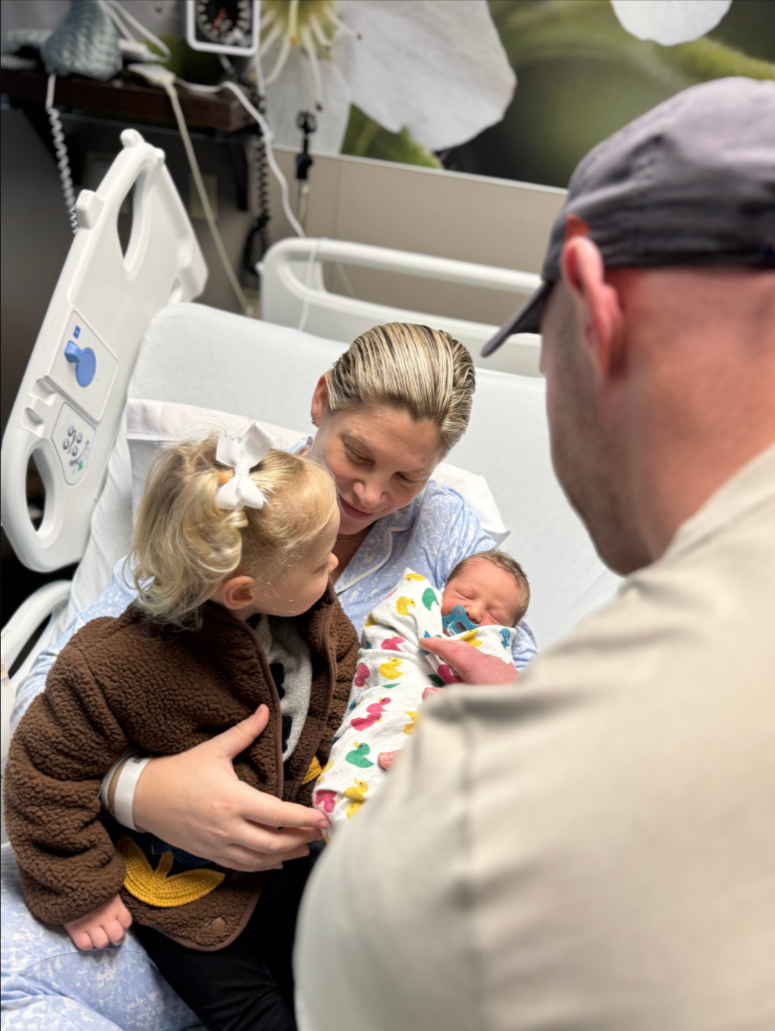
When Henry was born, I got to hold him.
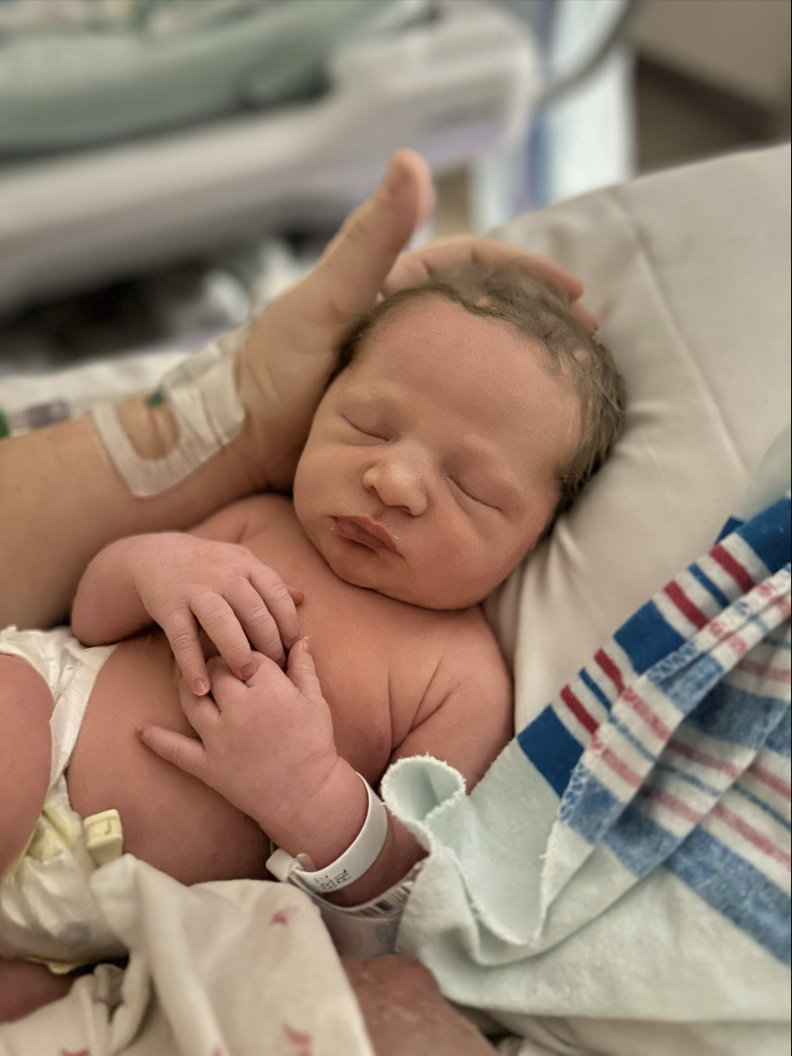
I got to bring him home.
I got to nurse him.
I got to learn his rhythms without monitors or nurses or the constant fear that someone might tell me something was wrong. I got to be the person who dressed him in the morning, fed him throughout the day, rocked him before his naps, and learned the small details of who he was becoming.
None of these moments felt small to me.
They felt like pieces of motherhood being returned.
And this time, I did not return to the classroom.
I stayed home—with both of them.
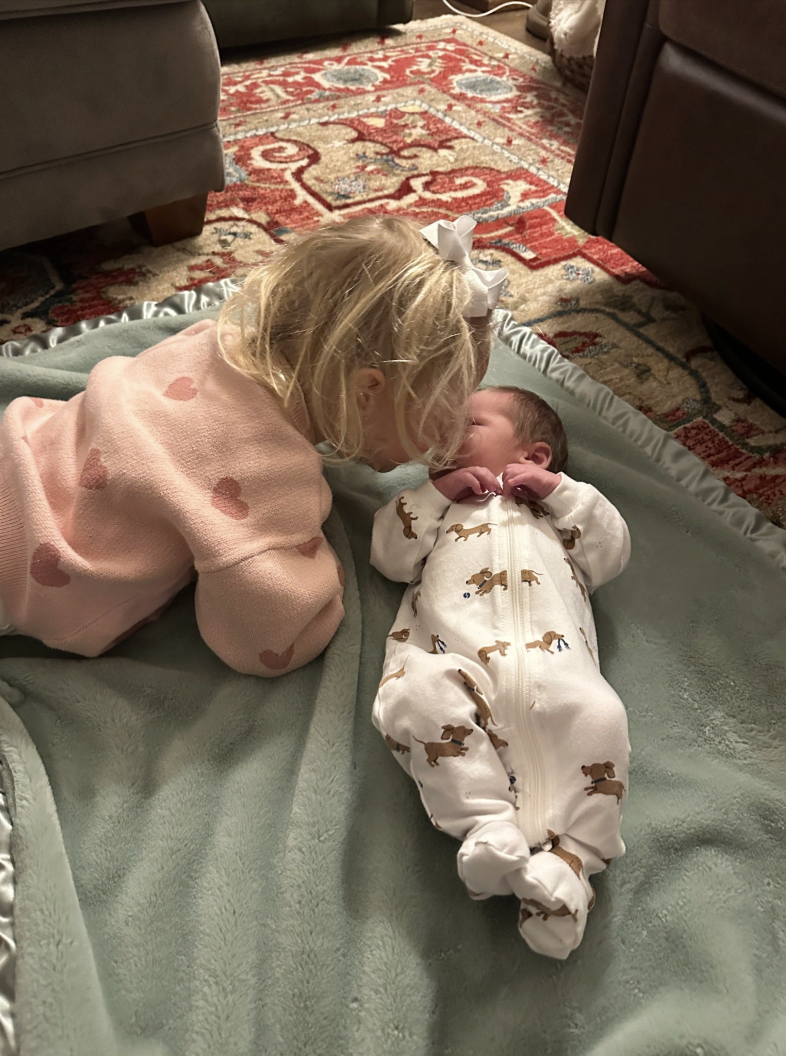
Now I am the one choosing Charlotte’s clothes, making her lunch, taking her to the library and gymnastics, and being there when she wakes from her nap. I get to nurse Henry while Charlotte plays beside us, learn the rhythms of our days together, and experience the ordinary moments I once believed I had handed away.
Staying home has not allowed me to recreate Charlotte’s infancy. That time is gone, and I have had to grieve it. But it has given me the chance to be present for the childhood still unfolding in front of me.
The days are not always peaceful, and I certainly do not enjoy every minute. There is a baby who cries and refuses to nap unless he is being held, a toddler deep in her threenager phase with a whine that can send me through the roof, and nights when dinner is pizza from a box.
But even on the loudest, hardest days, I know I am living inside the ordinary motherhood I once longed for.
In choosing to stay home, I was not only getting something new with Henry.
I was getting something back with Charlotte too.
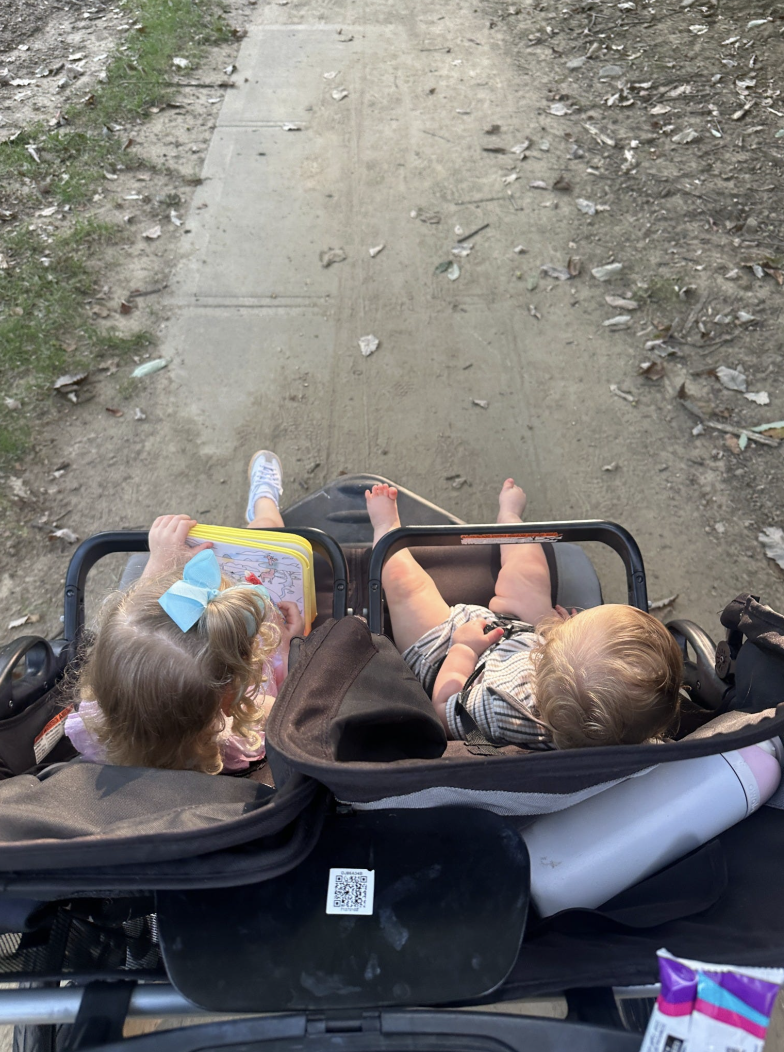
Having Henry did not erase what happened with her. It did not make her premature birth less frightening or her forty days in the NICU less painful. It did not give me back the newborn days we missed or remove the guilt I carried after returning to work.
And Henry was never responsible for healing me.
But his birth gave me a new experience to place beside the traumatic one.
It showed me that my body was not only the body that developed preeclampsia. It was also the body that carried another baby, delivered him, nourished him, and comforted him.
My body had not betrayed Charlotte.
It had recognized that she was no longer safe inside me and had done the only thing it could do to give her a chance to live.
That is easier for me to understand now.
For a long time, when I looked back at Charlotte’s birth, I saw everything my body could not do. Henry’s birth helped me see everything it had done.
It had protected her, even when protecting her meant letting her go sooner than either of us was ready.
It had survived.
So had she.
And perhaps I had not failed her after all.
Having a second baby did not make me a better mother to Charlotte. But it allowed me to see the mother I had been all along—the one who showed up beside an isolette, carried milk back and forth to the hospital, learned the language of the NICU, attended appointments, worried over every milestone, returned to work when she had to, and made sure her daughter was surrounded by people who loved her.
Charlotte has always been determined, observant, and fiercely independent. Henry is more physically affectionate, happiest when he is pressed against me. Sometimes I wonder how much of the difference between their babyhoods belongs simply to who they are—and how much belongs to the mother I was able to be when each of them arrived.
Henry did not rewrite Charlotte’s story.
He helped me rewrite the story I had been telling myself about my place in it.
I thought I had done Charlotte a disservice by being her mother.
Now I understand that I was exactly the mother she needed.
And maybe having Henry did not heal the part of me that Charlotte’s birth broke.
Maybe he simply helped me see that it had never been broken beyond repair.